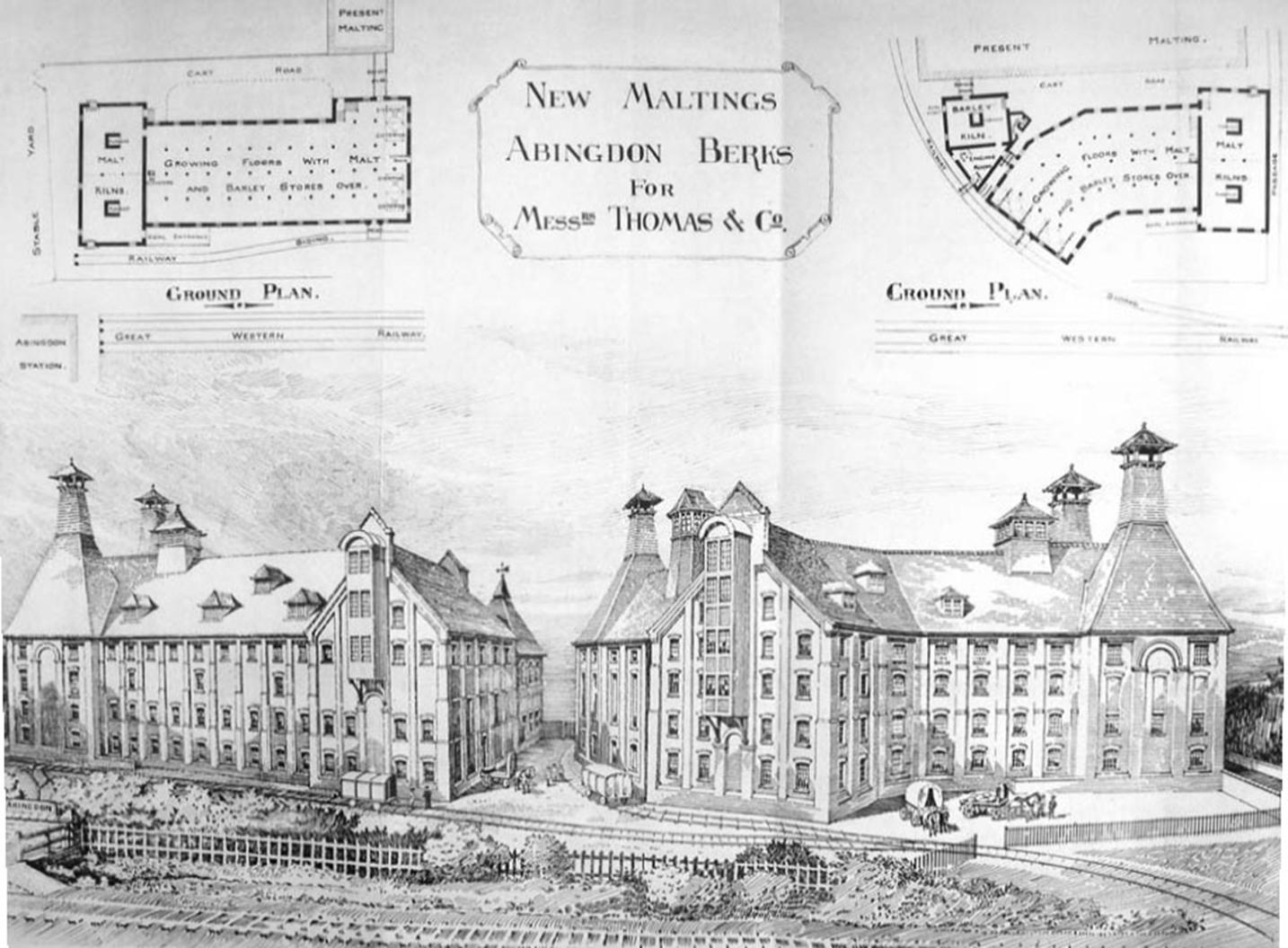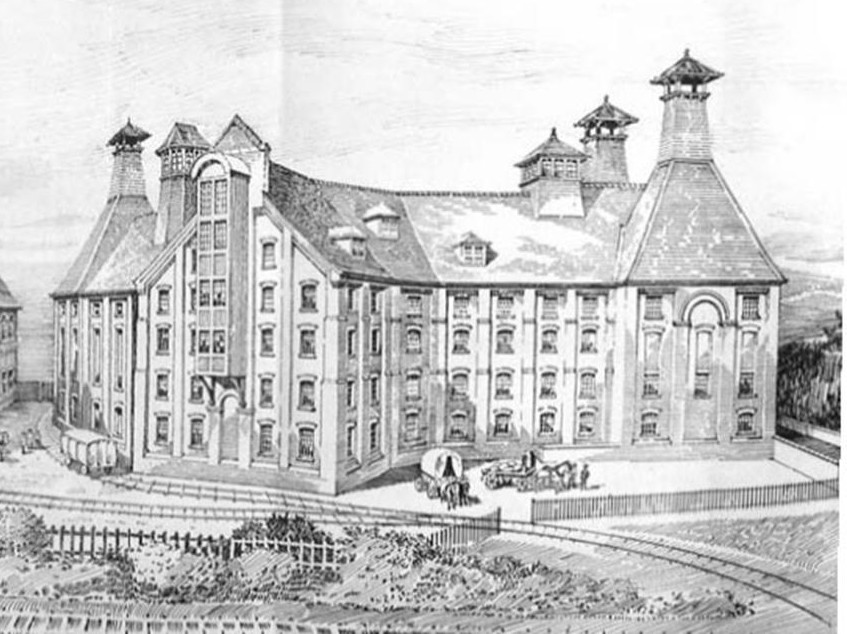
On February 19th Martin Buckland gave us an extremely interesting talk on the former malting industry in Abingdon, which used to be of great importance owing to the town’s access to the river enabling easy transportation of the product to London and other places where brewing took place. Later the coming of the railways enabled faster journey times and a wider range of destinations. He showed us maps of the sites of the buildings and images of former maltings, some of which have been demolished and replaced by other buildings (such as the Malthouse doctors’ surgery), while others have been converted to residential accommodation and are still identifiable for what they once were. Good examples of these are off The Vineyard and west of West St. Helen’s Street. Martin told us what malt was and described the structure of the buildings and how the different floors were used for heating, drying and roasting the barley to produce the end product. Pointed turrets, originally topped with cowls for emitting waste gases, are still visible on some of the buildings.
Martin then went on to discuss the history of the Morland Brewery, including how the strength of the beer produced was dictated by the various taxation regimes that existed over past centuries. He described how it took over other local breweries and was then itself taken over and closed down by Greene King in 2000. At that time he and other local industrial archaeologists were allowed to take as much old equipment as they liked from the brewery, thus preserving many historical brewing items, some of which are now in local museums. Martin did an excellent job in emphasising the importance of beer production in all its stages as a former Abingdon industry.