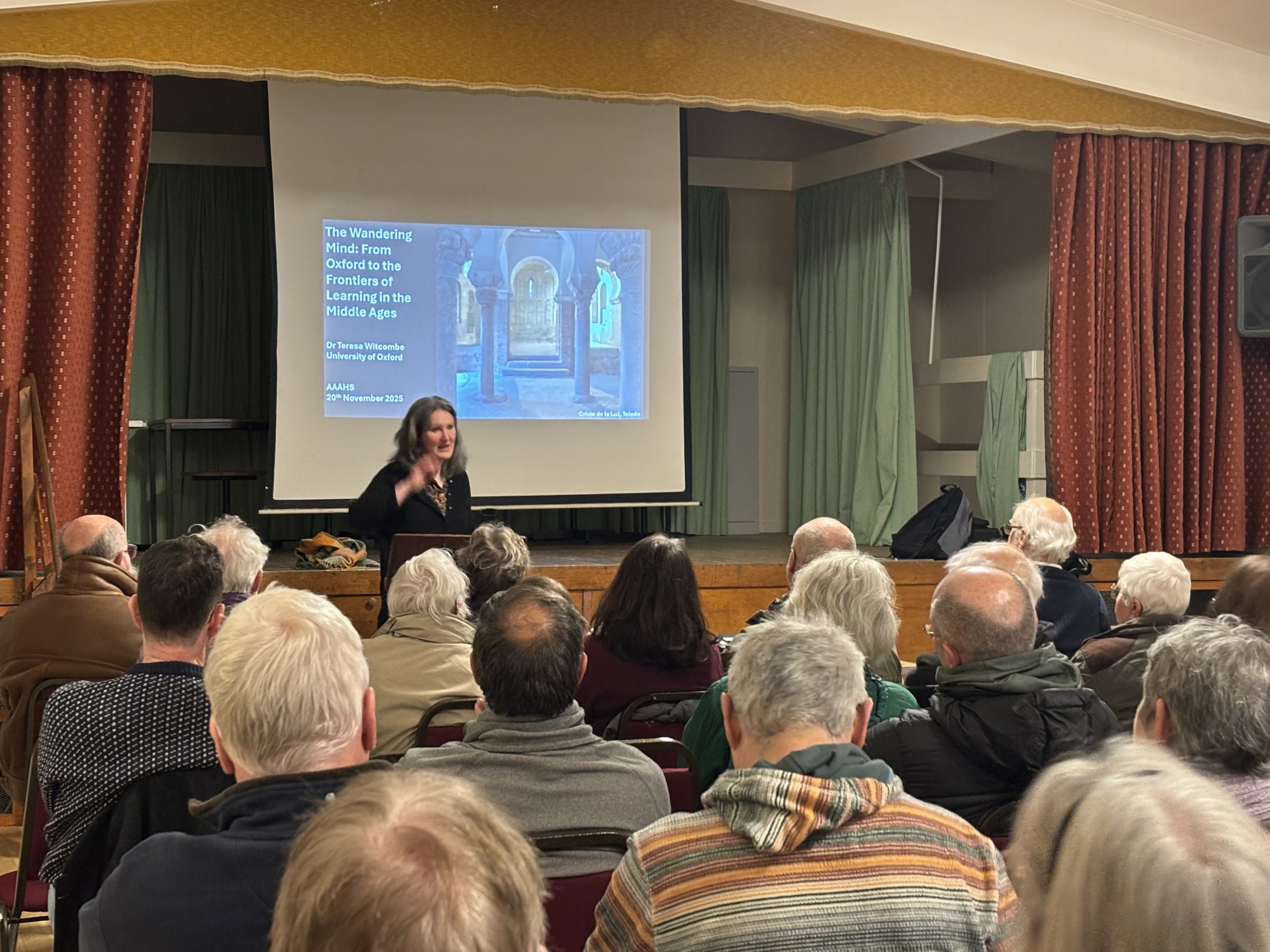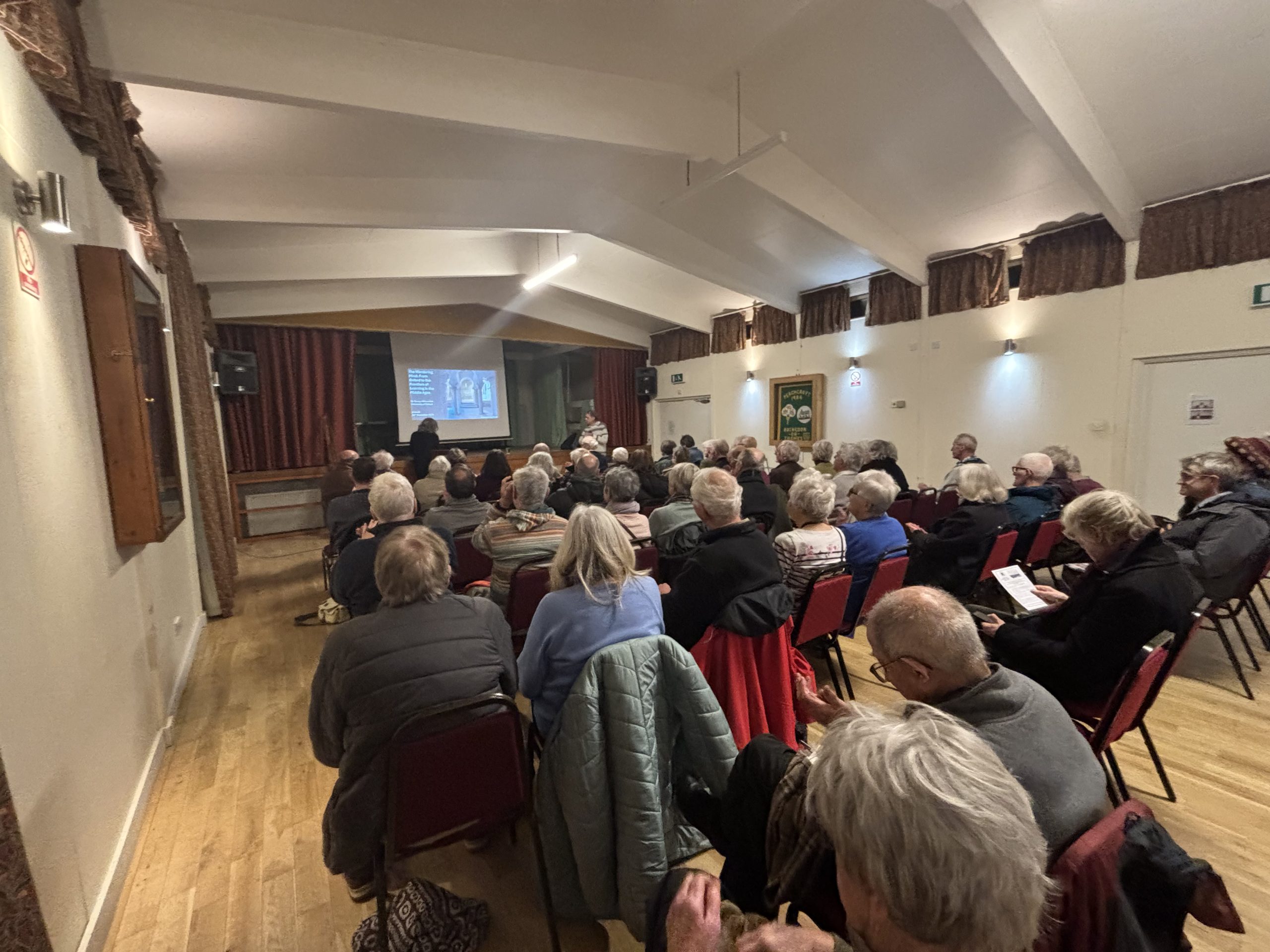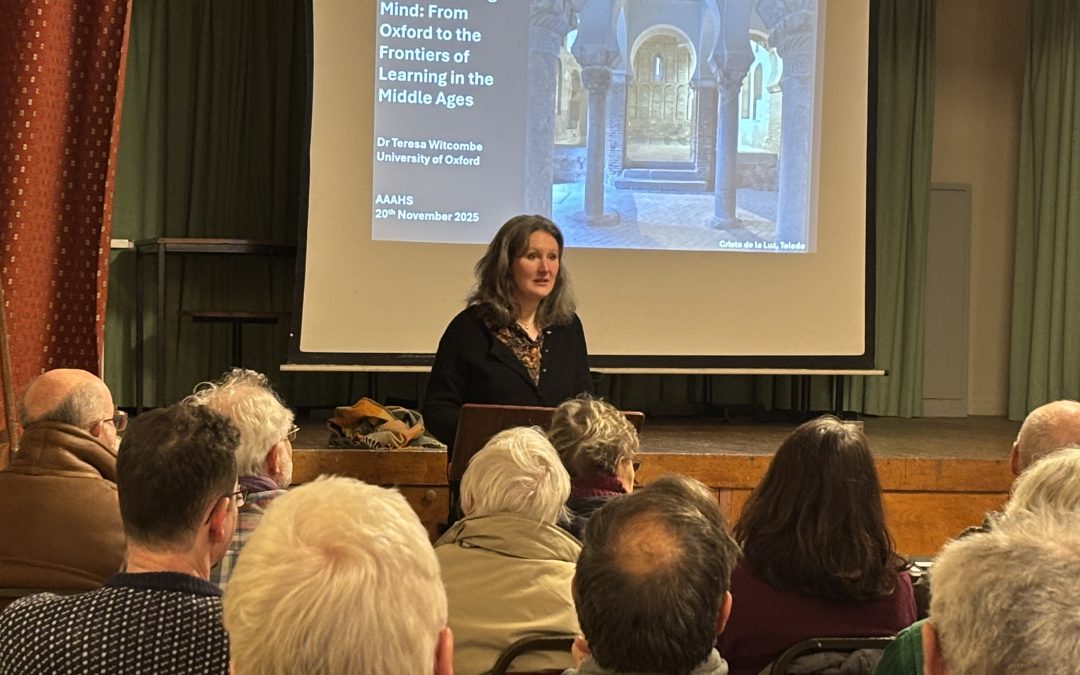
On 20 November 2025, the Society welcomed Dr Teresa Witcombe of the University of Oxford for a thought-provoking talk that took us far beyond our usual geographical and disciplinary boundaries, exploring medieval learning at the very edge of Christian Europe.
Rather than focusing primarily on excavation or material remains, Teresa led us into the intellectual and cultural landscape of 12th-century Spain — the terminus Europae, where Christian Europe met the Islamic world of al-Andalus. At the heart of her talk was the journey of Daniel of Morley, an English scholar who travelled in the 1160s in search of the most advanced knowledge available.
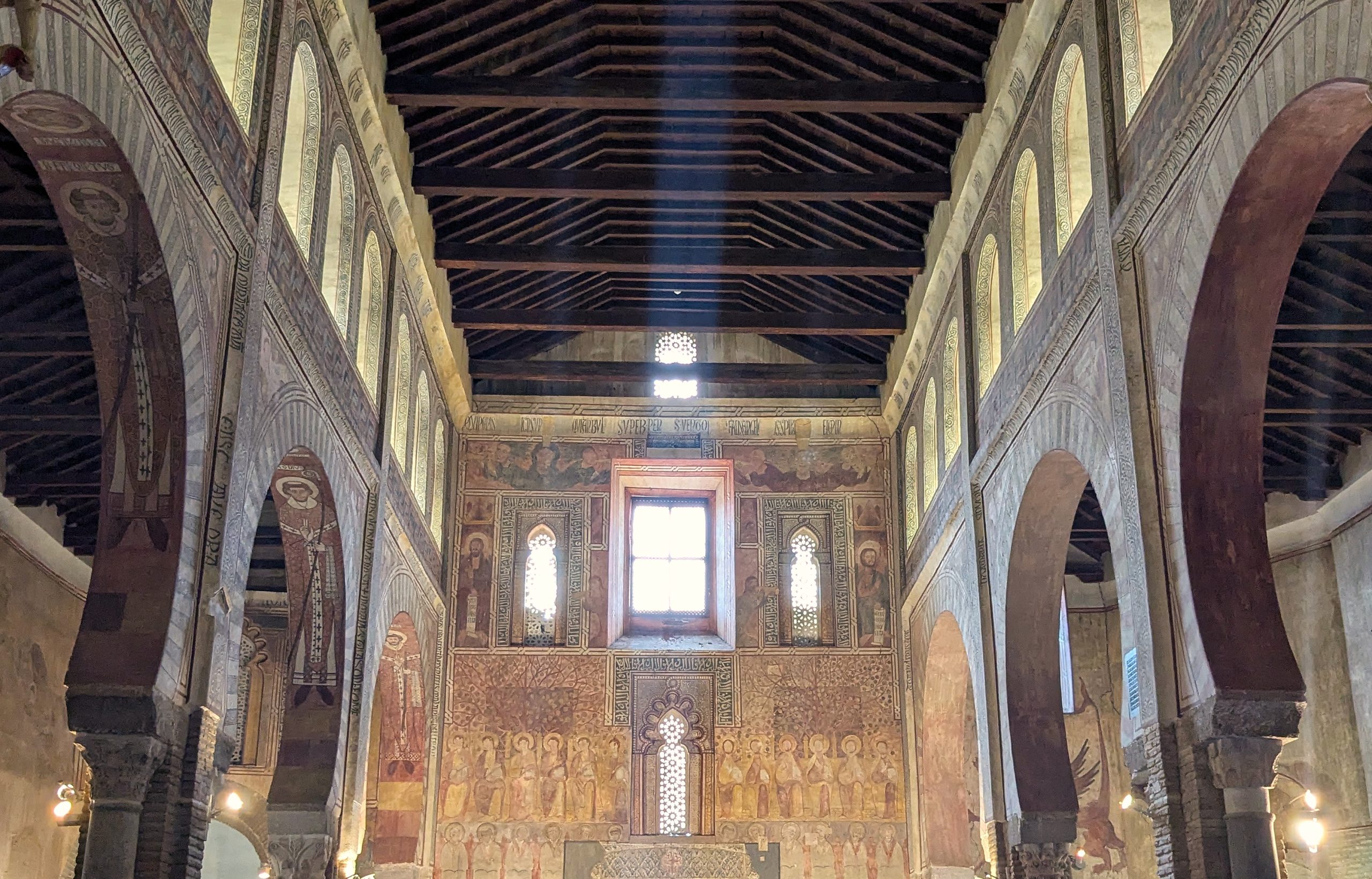
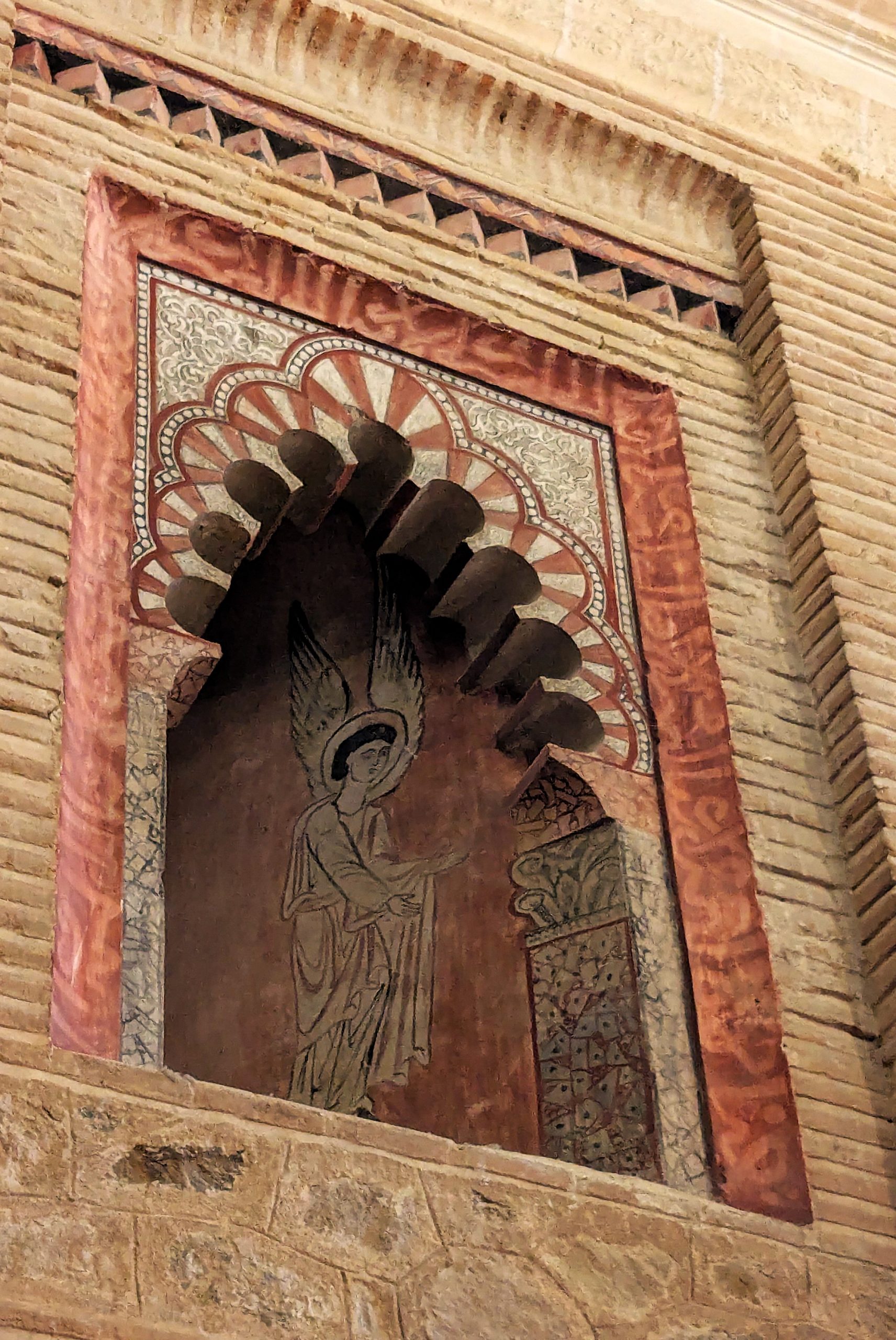
Daniel’s path first took him to Paris, which he reportedly found disappointing, before continuing on to Toledo — a city that was at once a military frontier, a place of political tension, and a remarkable hub of learning. Conquered by Christian forces in 1085 through negotiation rather than destruction, Toledo retained much of its Islamic architectural fabric, with mosques converted into churches and minarets transformed into bell towers. Christians, Jews, and Muslims lived and worked alongside one another, and Arabic continued to be spoken and written by Christian communities.
This permeable frontier fostered an extraordinary exchange of ideas. Toledo’s libraries and translation networks made available, often for the first time in Latin, the works of thinkers such as Aristotle, Avicenna, and Averroes, alongside texts on astronomy, medicine, mathematics, and philosophy. Jewish scholars played a crucial role in translating and transmitting this knowledge, enabling figures like Daniel to pursue what he described as the “fourfold path” of higher learning.
Teresa emphasised that this flourishing of scholarship did not occur in a peaceful utopia. Toledo was a place of profound tension as well as collaboration — shaped by trade, raids, war, and religious difference. Yet it was precisely this combination of proximity, pressure, and curiosity that allowed learning to thrive. Knowledge, like architecture, was both preserved and transformed, recycled from the ancient world and built upon in new and unexpected ways.
By guiding us through this complex world via Daniel of Morley’s own experience, Teresa brought vividly to life a moment when borders were not barriers but catalysts. Although a departure from the Society’s usual focus, the talk captivated the audience and offered a powerful reminder that the history of ideas is inseparable from the movement of people, cultures, and places.